
Latest Post
-
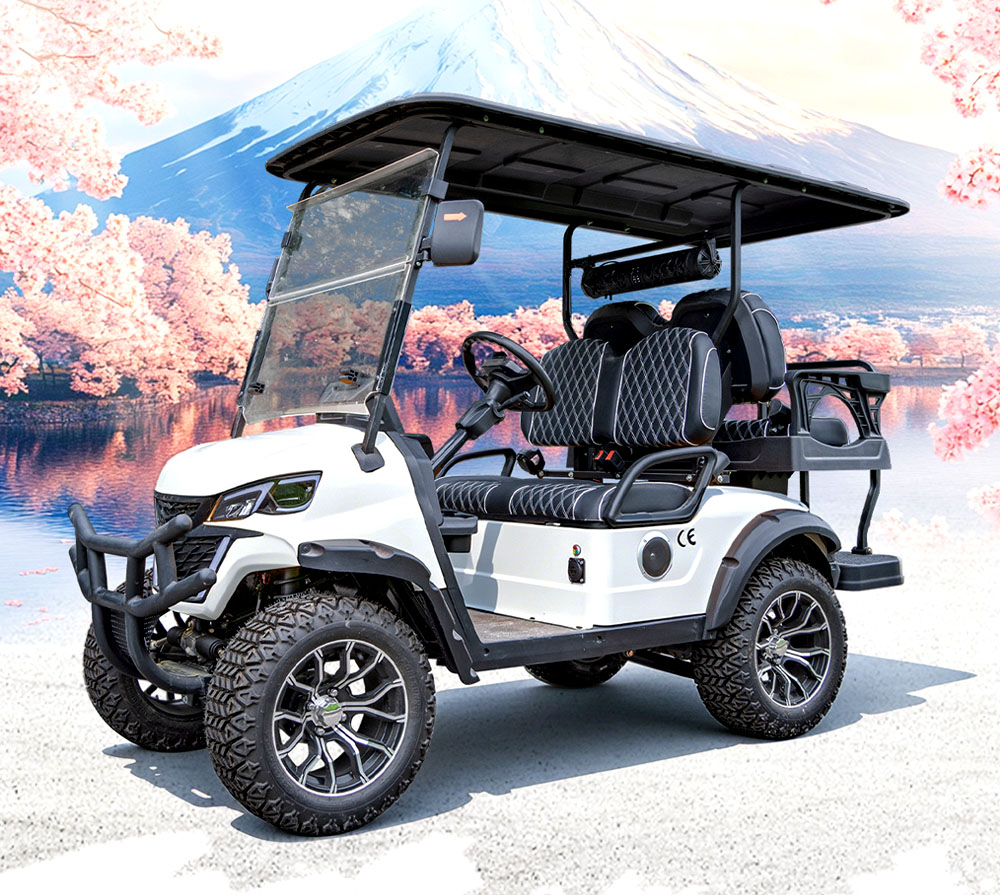
Preview of the Tokyo Golf Cart Show in Japan
July 03,2026 -
Preview of the Tokyo Golf Cart Show in Japan
July 03,2026
In crushing operations such as mining, building demolition, and road maintenance, the pneumatic handheld rock hammer has become an indispensable handheld crushing tool due to its core advantages of powerful performance and flexible operation. Compared to electric, hydraulic, and other types of rock hammers, its unique pneumatic drive enables stable and reliable performance in complex working conditions. This makes it highly favored by construction personnel and widely used in various small-to-medium-scale crushing tasks.
Powerful performance and high crushing efficiency are the core strengths of pneumatic handheld rock hammers. Utilizing compressed air as its power source, it delivers instantaneous, powerful impact force, effortlessly handling the crushing demands of hard materials like rock, concrete, and masonry. Whether for small-scale mining excavation, tunnel maintenance, or demolition tasks like removing old walls or breaking ground in construction projects, it completes operations swiftly, significantly boosting work efficiency. Additionally, its adjustable impact frequency allows precise adaptation to material hardness, preventing material waste and energy overconsumption caused by excessive crushing.
Portable and flexible, it adapts to diverse and complex working conditions. The pneumatic handheld rock hammer features a compact design, typically weighing between 10-30 kilograms. Equipped with an ergonomic, non-slip handle, operators can easily grip and maneuver it, facilitating work in confined spaces, elevated areas, and other locations inaccessible to larger equipment. For instance, during interior wall renovations, localized tunnel repairs, or rock clearance for slope stabilization, it navigates flexibly to precisely target breaking points, reducing construction complexity. Furthermore, its streamlined design—free of motors and hydraulic lines—eliminates operational constraints and enhances safety.
Stable, durable, and low-maintenance. The pneumatic drive eliminates complex transmission structures, resulting in minimal component wear and a failure rate far lower than electric or hydraulic rock hammers. It operates reliably even in harsh environments like dusty or humid conditions. Routine maintenance requires only periodic checks of air path seals and lubricant replenishment, eliminating the need for specialized repair teams and significantly reducing maintenance costs and downtime. Furthermore, compressed air serves as a clean energy source, producing no exhaust emissions during operation and generating relatively manageable noise levels, aligning with green construction principles.
In summary, pneumatic handheld rock hammers precisely meet the demands of small-to-medium-scale breaking operations through their core strengths: powerful performance, flexible portability, and stable durability. They play a vital role across mining, construction, roadworks, and other sectors, serving as practical tools for boosting construction efficiency and reducing operational costs.
Add message: